



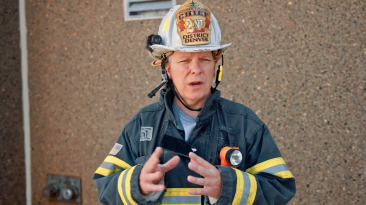
When your fire building involves a standpipe system there should be a big question mark in your mind if the best strategy and tactic is to utilize it or stretch from the pumper.
Layout D
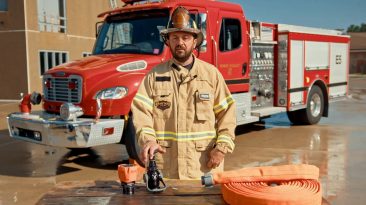
As the American Fire Service keeps trending towards high flow, low pressure attack packages it is important to understand what Dennis LeGear refers to as ‘gold standard’ for fire stream development in this episode.
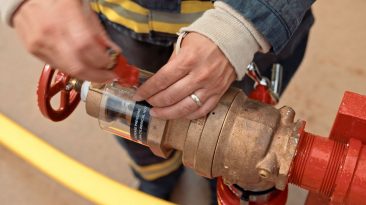
The URFA Field Adjustable Pressure Reducing Standpipe Valve is the only Field Adjustable Pressure Reducing Valve designed with the firefighter in mind.
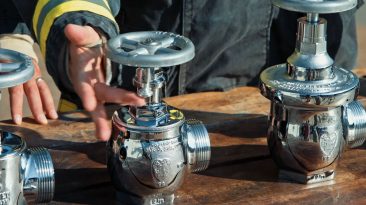
There are four main type of standpipe valve outlets and in this episode Dave McGrail and Chris Martin review design features as well as operational considerations that firefighters should be aware of relating to them.
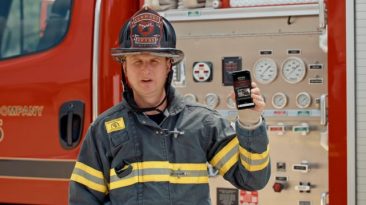
Chris Martin reviews the features of the Elkhart Brass Hard Facts Calculator App in this episode.
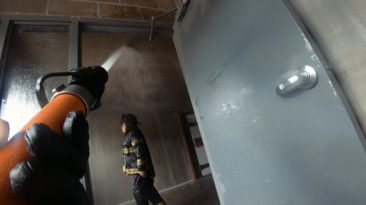
Stream movement and stream angle have a major impact on fire attack and getting water to the seat of the fire.
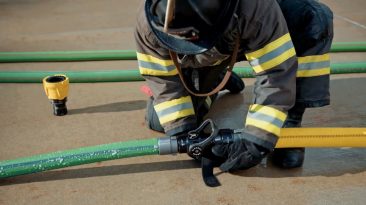
Extending hose lines can be done in a variety of different ways on the fire ground.
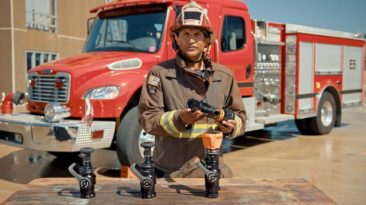
Daryl Liggins explains the implications of passing debris in a nozzle equipped with an inlet screen, as well as a nozzle equipped with a stream shaper which can act as a screen depending on its placement.
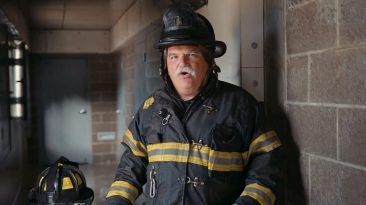
Ray McCormack demonstrates in this episode how a solid stream can be manipulated to cool a hallway when making an advance to the fire room.
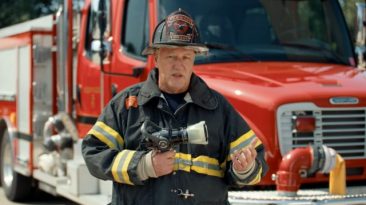
Jerry Herbst reviews smooth bore, fixed flow, selectable, and automatic nozzle designs in this episode and advantages and disadvantages of each type.
PRESENTED BY